String-Level Monitoring vs Plant-Level Monitoring: Which Matters More for PR?
Plant-level monitoring reports PR. String-level monitoring protects it.
Your solar plant could be losing money right now—and you might not even see it. Performance Ratio (PR) is the number everyone watches, but it only tells you what happened, not why it happened. A plant showing 78% PR might look fine—or it might be hiding a few bad strings quietly pulling performance down.
The real difference comes down to one thing: are you looking at the whole plant, or actually checking each string?
But here's a question that doesn't get asked nearly enough: at what level is your plant actually being monitored? Because plant-level monitoring and string-level monitoring are not the same thing—and treating them as interchangeable is one of the most common and quietly expensive mistakes in solar O&M.
Let's go through both properly, look at what each one catches (and what each one misses), and figure out where they each actually move the needle on PR.
What Is Performance Ratio, and Why Does Monitoring Level Matter?
Before diving into the monitoring debate, it's worth being precise about what PR actually measures. Performance Ratio (PR) is defined in IEC 61724-1 as the ratio of two normalized yields: the final yield (Yf) and the reference yield (Yr). Yf is the net AC energy delivered to the grid, divided by the plant's installed DC capacity — expressed in hours. Yr is the reference yield: the total plane-of-array (POA) irradiation in kWh/m², divided by the reference irradiance of 1,000 W/m² at standard test conditions — also expressed in hours, representing equivalent peak sun hours. Because both Yf and Yr share the same unit, PR is dimensionless. In formula terms: PR = Yf / Yr.
In plain terms: PR tells you how well your plant converts the available solar resource into usable energy, after accounting for all losses. Those losses include inverter inefficiency, wiring resistance, module temperature effects, soiling, shading, mismatch between modules, and component failures.
Performance Ratio (PR) is the most widely tracked metric for solar performance—but it is not the only one. Metrics like Capacity Utilization Factor (CUF) measure how much energy your plant produces relative to its installed capacity, offering a complementary view of overall plant output.
Here's why monitoring level matters for PR: the metric is a whole-system average. An average is extremely good at hiding localized problems. A plant running at 79% PR might look like it's broadly underperforming—or it might have fifteen strings operating perfectly at 83% PR and four strings dragging the average down with failures nobody has identified yet. Plant-level monitoring shows you that 79% figure. String-level monitoring lets you find those four problem strings.
Plant-Level Monitoring: What It Does Well
Plant-level monitoring tracks the overall performance of the installation. Typically, this means measuring total AC energy export, irradiance at the plane of array (POA), ambient and module temperature, and calculating a system-wide PR from those inputs.
This data flows through a SCADA system or monitoring platform and gives operators a high-level picture of how the plant is performing against its expected energy model. For PPA compliance reporting, regulatory submissions, and investor dashboards, plant-level data is exactly what you need.
Plant-level monitoring also sets the baseline. It tells you that your PR has dropped from 82% to 76% over three months. That is genuinely valuable information. The problem is that it stops there—it tells you something is wrong, but gives you no information about where to look.
Think of it like a company's quarterly revenue report. The number matters. But if revenue falls, you can't fix anything until you know which product line, which region, or which customer segment is the issue.
String-Level Monitoring: Where the Detail Lives
String-level monitoring takes individual current and voltage measurements from each string in the array—where a string is a series-connected group of modules feeding into a string combiner box (SCB) or directly into an inverter MPPT input. Any deviation in one string shows up directly in the monitoring data.
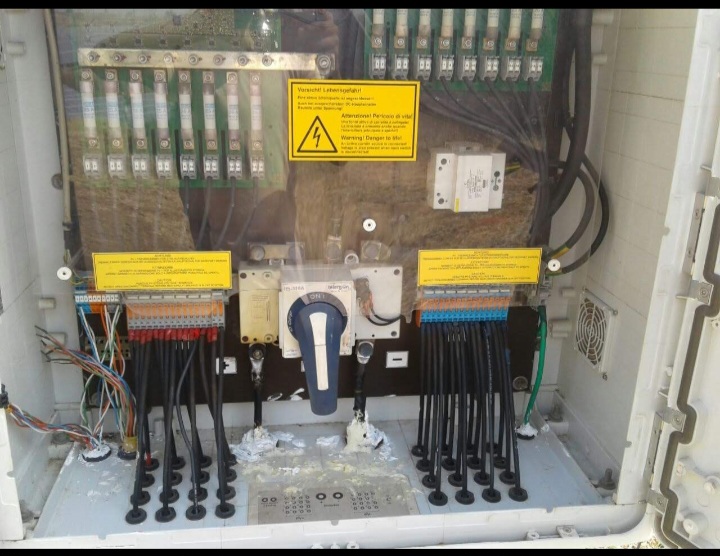
This granularity changes what O&M teams can actually do. Instead of dispatching a technician to walk the entire array after a PR drop, the monitoring system points directly to the underperforming string. That cuts diagnostic time, reduces labor cost, and—critically—shortens the period over which the fault is actively destroying your PR.
String-level monitoring is particularly effective at catching the faults that plant-level monitoring silently absorbs into the PR average. Below are the three most significant ones.
Bypass Diode Failures
Most solar modules contain three bypass diodes, each protecting a substring of cells. When a bypass diode fails in shunt mode (the common failure pattern), it permanently short-circuits the substring it was designed to protect. The result is that the affected module loses at least one-third of its output — and often more, because the inverter's MPPT algorithm must now reconcile a string with a distorted IV curve, which can push the remaining substrings away from their individual optimal operating points. If you want to understand how this impacts energy extraction, see how MPPT efficiency works in solar inverters.
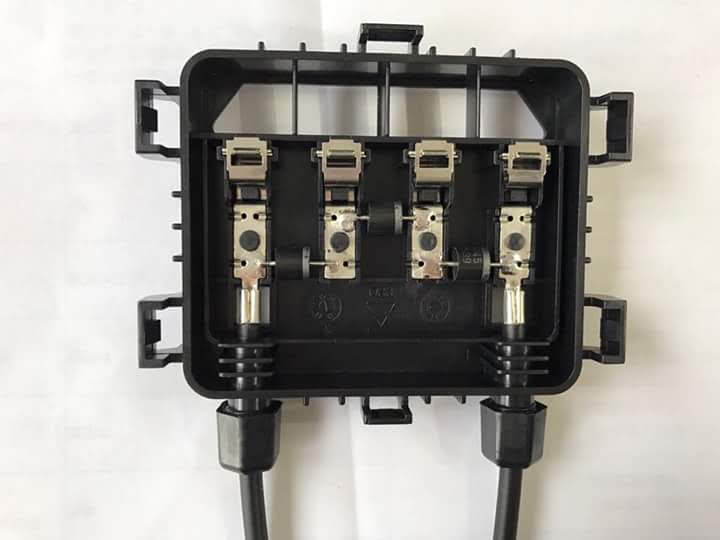
At the string level, this typically appears as a sustained drop in string current under stable irradiance conditions—often visible as a deviation in the expected current profile. This behavior indicates a likely substring or module-level fault, such as a bypass diode issue, though further inspection is required to confirm the exact cause. At the plant level, if you have a large array, that same event might shift your overall PR by less than one percentage point, making it easy to overlook or misattribute to external factors like weather variation or sensor drift.
A documented case study published by pv magazine describes this exactly: string monitoring at a plant detected negative current deviations across multiple strings. The PR for the affected period was measurably lower than the same month in the previous year under comparable irradiance. Without string-level data, the fault pattern—bypass diode failures across several modules—would have remained unidentified, and the yield loss would have compounded.
Source: pv-magazine — "What happens when bypass diodes fail?" (2017)
Mismatch Losses
Mismatch happens when modules or strings within an array don't share identical electrical characteristics—because of manufacturing tolerances, differential aging, partial shading, or soiling variation across rows. Because series-connected modules must carry the same current, a lower-performing module forces the entire string to operate below its optimal power point.
According to industry modeling tools such as Aurora Solar (based on published research benchmarks), mismatch losses in a new, unshaded array typically range from 0.01% to 3% of total DC output, with a commonly used default of 2% in simulation tools. These losses tend to increase over time as modules age at different rates. A more accurate way to capture long-term performance impact is through degradation- and insolation-corrected CUF , which accounts for both aging effects and solar resource variability. NREL's degradation analysis found that while most modules degrade at roughly 0.5–1% per year, some degrade faster, creating increasing mismatch between strings as the plant ages.
Source: Aurora Solar — "Understanding PV System Losses, Part 1" (2024) · Tigo Energy — The Solar Mismatch Challenge
String-level current monitoring catches mismatch early—often before it becomes visible in monthly PR figures. A string consistently producing 3–5% less current than its neighbors on clear days is a clear signal. At plant level, that same underperformance is folded into the aggregate.
Non-Uniform Soiling
Soiling is rarely uniform across a large ground-mounted array. Dust accumulation, bird droppings, and pollen deposits vary by row position, wind direction, and proximity to access roads. A row near the plant boundary might accumulate significantly more dust than rows in the center.
Plant-level monitoring picks up the net soiling loss in your PR, but gives no indication of where it's concentrated. String-level current data, compared across strings with the same orientation and tilt on the same clear-sky day, directly reveals which sections of the array are soiling faster. That information turns a blanket cleaning schedule into a targeted one—saving water, labor, and cost while maintaining better average PR between cleans.
IEC 61724-1 Monitoring Classes: What the Standard Actually Requires
The IEC 61724-1 standard—the international benchmark for photovoltaic performance monitoring—classifies monitoring systems into two accuracy tiers: Class A (High Accuracy) and Class B (Medium Accuracy). The 2017 first edition had a third tier (Class C), but the current 2021 second edition eliminated it entirely.
Class A monitoring is the appropriate level for utility-scale and large commercial plants, especially those subject to contractual performance guarantees or long-term lender monitoring. Class B applies to smaller commercial and well-instrumented residential systems. The standard also specifies that pyranometers in Class A systems must comply with ISO 9060 requirements and are required to be cleaned at least weekly—unless it can be demonstrated that less frequent cleaning maintains the necessary measurement accuracy.
Critically, the standard also specifies that PV module temperature measurement has a significant impact on the accuracy of the calculated performance ratio. Poorly installed or low-quality temperature sensors can introduce errors exceeding the 2°C accuracy requirement set in IEC 61724-1—which in turn produces a systematically biased PR value, independent of how good your string monitoring is.
Source: Hukseflux — How to calculate PV performance ratio (2025)
The takeaway for the string vs plant monitoring debate: the standard doesn't mandate string-level monitoring on every plant, but it makes clear that larger, higher-value systems require higher accuracy—and accuracy requires granularity. Running a utility-scale plant on Class B monitoring when Class A accuracy is warranted is a false economy — the undetected losses from a few faulty strings will routinely exceed the cost of upgrading sensors and maintenance schedules to meet Class A requirements.
So Which One Matters More for PR?
Direct Answer — Featured for Search
Plant-level monitoring reports your Performance Ratio. String-level monitoring protects it. Neither replaces the other. Plant-level gives you the final PR figure needed for reporting and PPA compliance. String-level catches the faults—bypass diode failures, mismatch creep, uneven soiling—that silently erode that figure before it appears in your monthly report.
The framing of this as a competition misses the point. Both monitoring levels serve distinct roles in the PR management chain. What matters is understanding which faults each level can and cannot catch—and designing your monitoring architecture accordingly.
That said, if you're forced to choose where to invest monitoring attention on a mid-size or utility-scale plant, string-level monitoring often has higher marginal value for PR protection. Plant-level data will always be available from your inverter communications and energy meters. The gap is almost always at the string level.
Monitoring Level Comparison at a Glance
| Capability | Plant-Level | String-Level |
|---|---|---|
| Overall PR reporting | ✓ Yes | Partial (needs plant data too) |
| PPA / lender compliance data | ✓ Primary source | Supporting only |
| Detect inverter-level faults | ✓ Yes — AC-side faults visible directly | ✗ DC-side only — MPPT tracking anomalies may be visible; AC-side inverter faults are not detectable |
| Detect bypass diode failure | ✗ Not directly | ✓ Likely — inferred from sustained current deviation patterns (requires confirmation) |
| Detect string mismatch growth | ✗ Absorbed in average PR | ✓ Yes — current deviation between strings |
| Identify non-uniform soiling rows | ✗ Only total soiling loss | ✓ Yes — cross-string current comparison |
| Targeted O&M dispatch | ✗ No — too broad | ✓ Yes — fault localized to string |
| Typical system size | All sizes | Mainly mid-size to utility-scale plants |
| IEC 61724-1 alignment | Class A or B depending on sensor quality | Supports Class A when properly deployed |
PR Accuracy Still Depends on Your Plant-Level Data Quality
One thing string-level monitoring cannot fix: the accuracy of your plant-level PR inputs. The PR calculation depends entirely on two high-quality measurements—POA irradiance and PV module temperature. If your pyranometer is dirty, poorly aligned, or shaded for part of the day, your PR figures are wrong before you've even looked at a string.
The same applies to temperature. A module temperature sensor that measures 4°C higher than actual cell temperature doesn't just introduce noise—it systematically inflates your temperature-corrected PR, making the plant appear better than it is. IEC 61724-1 sets a maximum allowable sensor error of ±2°C, and instructs users to carefully select and install sensors to meet this threshold.
The practical implication: a plant can have excellent string-level monitoring and still report misleading PR figures if the irradiance or temperature inputs are poor. Both layers need to be right simultaneously. String monitoring identifies where energy is being lost in the DC array; plant-level sensor quality determines whether the PR figure you report is actually meaningful.
A Practical Guide: Which Monitoring Level Do You Need?
For small rooftop commercial and industrial systems below 500 kW, plant-level and inverter-level monitoring together usually provide sufficient visibility. String-level monitoring is beneficial but not always cost-justified at that scale.
For ground-mounted plants between 500 kW and 5 MW, string-level monitoring becomes strongly recommended. The array is large enough that a plant-level PR drop of even one percentage point can represent significant revenue loss, and the cost of locating a fault without string data is disproportionate to the hardware investment.
For utility-scale plants above 5 MW—and especially for plants operating under PPA agreements or lender-monitored performance guarantees—string-level monitoring is the baseline, and Class A monitoring per IEC 61724-1 is the target. The cost argument against upgrading is usually outweighed by a single season of undetected string faults.
In modern solar parks, PR should typically exceed 80%, according to industry benchmarks reported by Wikipedia's Photovoltaic System Performance article, drawing from field data across utility-scale plants in Europe and elsewhere. Plants that consistently hold above that threshold, year after year, almost universally have granular monitoring in place that catches DC-side losses before they compound.
Source: Wikipedia — Photovoltaic System Performance (updated Feb 2026) · RatedPower — Performance Ratio (2024)
Final Thoughts
The string vs plant monitoring debate isn't really a competition—it's a question of what you can actually see, and what you're prepared to miss.
Plant-level monitoring gives you the score. String-level monitoring shows you the game.
For any plant above 500 kW, and especially for plants with active performance obligations, string-level monitoring is the difference between O&M that reacts to problems and O&M that prevents them. Your PR will reflect that difference—consistently, across every reporting period.
The good news is that the cost of string monitoring hardware has fallen significantly over the past decade, and modern monitoring platforms integrate string data directly into PR dashboards. The investment case is straightforward once you model a single season of undetected bypass diode failures or uncorrected soiling imbalance against the hardware and commissioning cost.
Have Questions?
Frequently Asked Questions
Does string-level monitoring improve Performance Ratio?
String-level monitoring does not directly improve PR — it protects it. By identifying underperforming strings caused by bypass diode failures, mismatch losses, or non-uniform soiling, string monitoring allows O&M teams to intervene before these faults drag down the plant's overall PR figures.
What is the difference between string-level and plant-level solar monitoring?
Plant-level monitoring measures overall AC energy output, system-wide PR, POA irradiation, and module temperature. String-level monitoring measures current and voltage at each individual string in the DC array, revealing localized faults that are invisible in the aggregate plant data.
What faults does string-level monitoring detect that plant-level monitoring misses?
String-level monitoring is effective at detecting bypass diode failures (which cause the affected module to lose at least one-third of its output), inter-string mismatch losses, and non-uniform soiling patterns across array rows. These faults are absorbed into the PR average at plant level and may remain invisible without string-level current and voltage data.
Want to calculate your plant's current Performance Ratio or model how monitoring gaps affect your numbers?
Try the Free PR Calculator →Sources & References
- IEC 61724-1:2021 — Photovoltaic System Performance Monitoring: Guidelines for Measurement, Data Exchange and Analysis. International Electrotechnical Commission.
- pv-magazine — "What happens when bypass diodes fail?" (2017). Case study: string monitoring detection of bypass diode failure in a 5 MW plant.
- Hukseflux — How to calculate PV performance ratio and performance index (2025). IEC 61724-1 monitoring class definitions and temperature sensor accuracy requirements.
- Aurora Solar — Understanding PV System Losses, Part 1 (2024). Mismatch loss range: 0.01%–3%, industry default 2%.
- Tigo Energy Help Center — MySolarSystem Part II: The Solar Mismatch Challenge. Mismatch losses 2–5% in new unshaded arrays; NREL module degradation data.
- PVsyst Documentation — Performance Ratio PR. PR definition, IEC 61724-1 weather-corrected PR formula.
- PVPMC / Sandia National Laboratories — Performance Ratio. Formal IEC 61724 definition: PR_AC = Y_fAC / Y_r.
- RatedPower — Performance Ratio (2024). PR 80% benchmark for high-performing plants; PR factors including temperature and shade.
- Wikipedia — Photovoltaic System Performance PR >80% benchmark for modern utility-scale parks.
- OSTI / DOE — Failure Analysis of Field-Failed Bypass Diodes. Peer-reviewed: shunt-mode diode failure causes one-third loss of module substring output.
- NREL — Weather-Corrected Performance Ratio (2013). PR quantifies inverter inefficiency, wiring loss, mismatch, temperature effects, soiling, downtime, shading, and failures.
- ScienceDirect — Performance ratio: Crucial parameter for grid-connected PV plants (2016). Multi-plant PR study per IEC 61724; PR values 0.7–0.81 range across field data.