Is Your Transformer Tap Setting Silently Killing Your Solar Plant's Performance?
By Aman Yadav
In many operating solar power plants, energy loss occurs without any visible equipment failure. Availability remains high, alarms stay silent, and equipment health appears normal. Yet exported energy consistently falls below expectation.
One of the most common and least questioned contributors to this gap is transformer tap setting. Tap selection is often treated as a commissioning activity and then forgotten. That assumption does not hold in a grid environment that continues to evolve throughout the plant’s life.
In a grid-connected solar power plant, transformer tap setting directly influences inverter operating voltage, export capability, and long-term performance indicators such asCapacity Utilization Factor (CUF) and Performance Ratio (PR).
Understanding Transformer Tap Settings and Their Impact on Solar Inverter Voltage
A transformer tap changes the effective turns ratio between the primary and secondary windings. In a solar power plant, this ratio decides the grid-side voltage for a given inverter output.
Taps are usually fixed or off-circuit in MV and HV transformers used for solar evacuation. That means each tap position represents a discrete voltage step. The selected tap becomes the reference voltage for the entire plant.
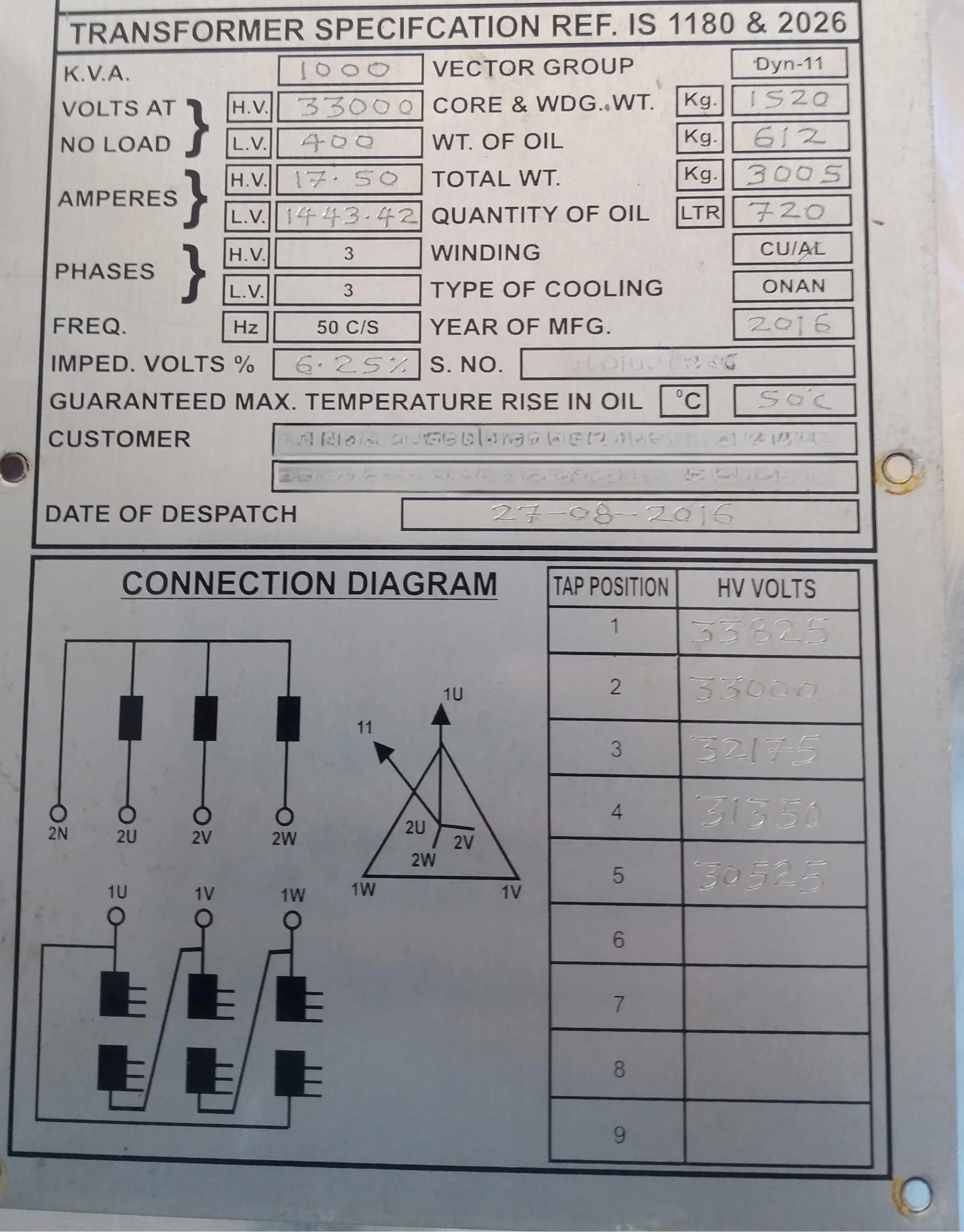
This nameplate data is critical. It shows that tap settings are not continuous controls. Engineers must choose the closest possible match to expected grid conditions.
Let's analyze the nameplate above. It shows a High Voltage (HV) side of 33000V (33kV). The tap changer allows for adjustments:
- Tap 1: 33825V (+2.5%)
- Tap 2: 33000V (0%) - The nominal setting.
- Tap 3: 32175V (-2.5%)
- Tap 4: 31350V (-5.0%)
- Tap 5: 30525V (-7.5%)
If your inverters are tripping due to high grid voltage, moving from Tap 2 to Tap 3 or 4 would lower the voltage seen by the inverter, giving it more headroom to operate without curtailing power. This is a fundamental part of solar power plant performance optimization.
How Changing Grid Conditions Affect Transformer Tap Performance
Grid voltage is not static. It varies with seasonal load patterns, agricultural pumping cycles, and regional demand behaviour. Over time, additional solar plants connected to the same feeder further reshape voltage profiles.
A transformer tap that looked perfect during commissioning may become suboptimal within a year. Higher daytime grid voltage pushes inverter operating voltage closer to limits. Lower grid voltage forces higher current flow for the same power export.
Both scenarios lead to energy losses that silently erode CUF and PR. Without ongoing review, these losses remain hidden within normal performance variability.
High Transformer Tap Settings: How They Reduce Solar Plant CUF
When the transformer tap is set too high, inverter voltage rises rapidly during periods of strong generation. This condition typically appears on clear days with low local demand, when grid voltage already sits near the upper limit.
As voltage approaches inverter protection thresholds, active power derating begins. The inverter limits output to protect itself, even though DC power and irradiance remain sufficient.
This loss directly reduces Capacity Utilization Factor. The effect becomes visible when generation data is evaluated using the CUF Calculator.
Analytics often show flat-topped generation curves during peak hours. Without voltage context, these losses are misattributed to inverter sizing or weather.
Low Transformer Tap Settings: Hidden Losses That Lower PR
Low transformer tap settings introduce a different class of losses. To maintain power export at reduced voltage, inverters operate at higher current. Higher current increases I²R losses in cables, transformers, and inverter components. These losses accumulate over time and reduce conversion efficiency.
These losses rarely trigger alarms. Instead, they manifest as gradual thermal stress and efficiency reduction. Over time, this degradation becomes visible only through detailed performance analysis.
Such losses often appear as unexplained PR decline when evaluated using performance ratio analysis, even though equipment availability and fault metrics remain healthy.
How and When to Adjust Transformer Tap Settings in a Solar Plant
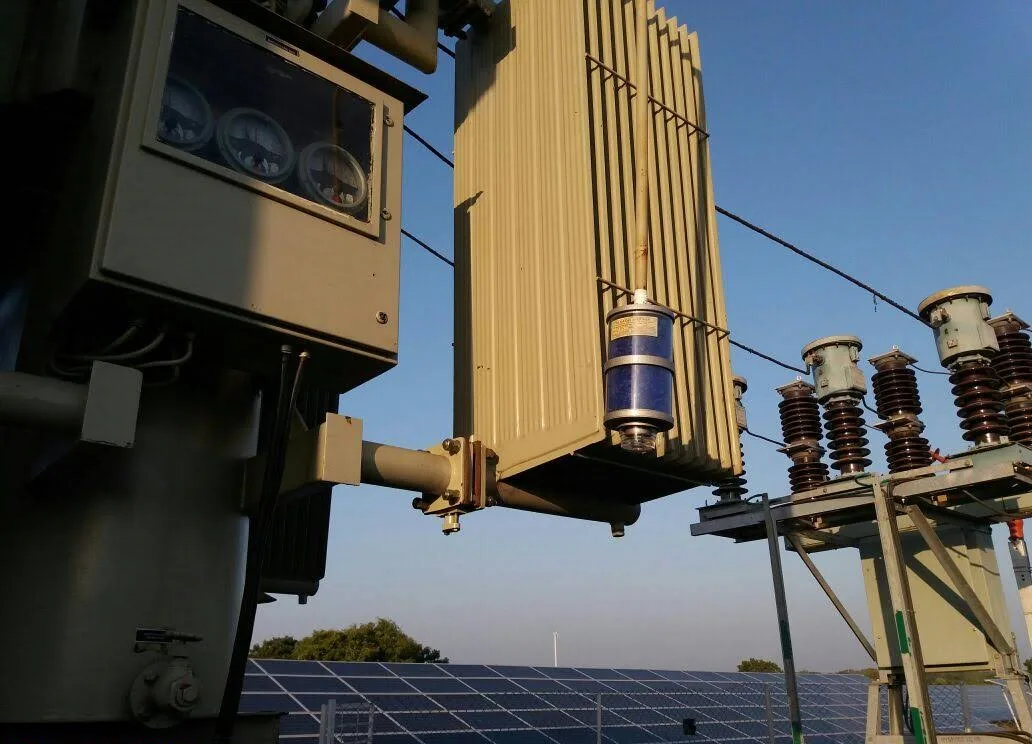
Transformer tap changes after commissioning are possible, but they require discipline. Engineers must review grid voltage data, inverter operating margins, and seasonal trends before any adjustment.
Tap changes should never be reactive. They must follow data-driven validation and safety procedures, including grid coordination where required.
The goal is not to chase daily voltage swings. The goal is to select a tap that maximizes annual energy export without stressing equipment.
When inverter voltage repeatedly approaches limits or when CUF and PR losses persist, a one-time shutdown to correct tap settings often delivers rapid performance recovery.
Identifying Voltage-Related Losses Through Solar Analytics
Analytics platforms reveal patterns that manual inspection misses. Voltage-driven losses show consistent time-of-day behavior across seasons.
- Midday power clipping without DC saturation
- Seasonal CUF reduction unrelated to irradiation
- Gradual PR decline with stable availability
- Frequent inverter overvoltage warnings without grid faults
Comparing expected versus actual output using Yield Analysis highlights lost generation that irradiance alone cannot explain.
Transformer Tap Decisions: Direct Impact on CUF and PR
Transformer tap settings influence both utilization and efficiency metrics. CUF reflects how much energy the plant is allowed to export. PR reflects how efficiently it converts available energy.
Poor tap selection erodes both, even when all equipment operates within specifications. Analytics make these losses visible and quantifiable.
Final Takeaway: Transformer Tap Settings Determine Your Plant’s Energy Export
Transformer tap settings are not passive configuration values. They actively shape inverter behavior, electrical losses, and grid interaction. They define the voltage envelope within which a solar power plant operates and determine how much energy the plant can export.
Treating tap selection as a one-time commissioning decision ignores the reality of evolving grid conditions. In modern solar plants, transformer taps belong firmly in the domain of operational optimization.